Call/ WhatsApp us: 0710942629 / 0736677646 Email: omaadvocates@gmail.com

Executing a corporate transaction in East Africa means navigating a layered legal, regulatory, and statutory compliance framework and getting any one layer wrong can stall a deal for months or unwind it entirely. This guide walks through the legal framework governing M&A in Kenya, the Competition Authority of Kenya’s approval thresholds, the choice between a share purchase and an asset purchase, and the documents that carry a transaction from letter of intent to completion. Ondieki & Matoke Advocates, based at A.C.K. Gardens in Upper Hill, Nairobi, advises buyers, sellers, targets, and private equity investors through every phase of the deal lifecycle across Kenya and the East African Community.
The Legal Framework Governing Mergers & Acquisitions in Kenya
- The Companies Act, 2015 — Governs corporate mechanics, board duties, share transfers, reconstructions, and statutory schemes of arrangement.
- The Competition Act, No. 12 of 2010 — Enforced by the Competition Authority of Kenya (CAK), mandating prior notification and clearance for transactions involving a change of control that cross the applicable financial thresholds.
- Sector-Specific Regulators — Banking (Central Bank of Kenya), Insurance (Insurance Regulatory Authority), Telecommunications (Communications Authority of Kenya), and Capital Markets (Capital Markets Authority for listed entities) each impose additional approval requirements on transactions in their sectors.
- Regional Frameworks — Mergers affecting multiple East African states may trigger additional notification requirements with the COMESA Competition Commission or the East African Community Competition Authority.

CAK Merger Notification Thresholds
Under the Competition Act and CAK guidelines, transactions fall into three review tiers based on combined assets or turnover:
| Category | Financial Threshold | Regulatory Obligation |
|---|---|---|
| Notifiable Merger | Combined turnover/assets ≥ KES 1 billion, and target turnover/assets ≥ KES 500 million | Mandatory approval required. The transaction cannot be implemented before clearance implementing early (“gun-jumping”) carries fines of up to 10% of turnover. |
| Exclusion Criteria | Combined turnover/assets between KES 500 million and KES 1 billion | Exclusion application required, with a shortened approval process. |
| Exempt / Non-Notifiable | Combined turnover/assets below KES 500 million | Exempt from mandatory notification, provided the transaction doesn’t otherwise engage regulated-sector rules. |
Share Purchase vs Asset Purchase: Which Structure Fits Your Deal?
One of the first decisions in any Kenyan acquisition is how the deal itself is structured buying the target company’s shares, or buying its underlying assets directly. The right choice depends on tax treatment, liability exposure, and how clean a break the buyer wants from the target’s history.
| Factor | Share Purchase | Asset Purchase |
|---|---|---|
| What’s acquired | Ownership of the company itself, including all its assets and liabilities | Specific assets and liabilities selected in the transaction, not the company as a whole |
| Liability exposure | Buyer inherits all liabilities, known and unknown making due diligence critical | Buyer can generally choose which liabilities to assume, offering more protection from undisclosed risk |
| Tax treatment | May attract different Capital Gains Tax and stamp duty treatment than an asset sale; contracts and licenses generally transfer automatically with the company | Stamp duty typically applies to the transferred assets; contracts and licenses often require third-party consent to transfer |
| Continuity | Business continues operating under the same legal entity, with existing contracts, licenses, and employee relationships intact | May require re-establishing contracts, licenses, and employment relationships under the buyer’s own entity |
| Best suited for | Buyers who want the whole business, including its history, and are comfortable with thorough due diligence covering that history | Buyers who want specific assets or operations without inheriting the target’s full liability history |
Neither structure is inherently better the right choice depends on what you’re actually trying to acquire, and how much of the target’s history you’re willing to take on. This is exactly the kind of decision that should be made with legal and tax advice together, before a term sheet is signed, not after. See our Mergers & Acquisitions page
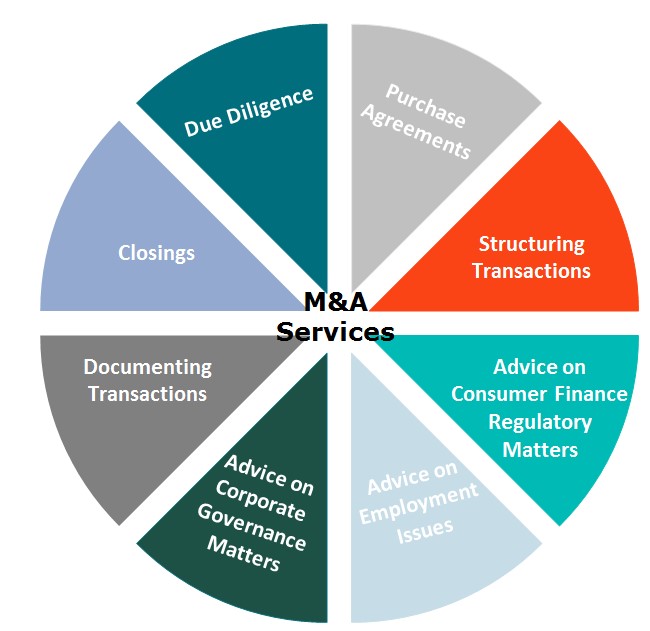
Comprehensive Mergers & Acquisitions Services
- Transaction Structuring — Advising on share purchases versus asset purchases to optimise tax liabilities Capital Gains Tax, VAT, and stamp duty and liability allocation.
- Legal Due Diligence — A comprehensive audit of the target’s contracts, employment obligations, real estate title deeds, intellectual property rights, pending litigation, and statutory tax compliance.
- Regulatory Approvals & Filings — Preparing and managing merger clearance applications before the CAK, COMESA, and sector-specific authorities.
- Negotiation & Transaction Documentation — Drafting non-disclosure agreements, letters of intent, share sale and purchase agreements, asset transfer agreements, and shareholders’ agreements.
Call now for a Free Consultation
Contact
0710942629 / 0736677646 / omaadvocates@gmail.com / info@omaadvocates.co.ke
Office
A.C.K. Garden Annex, 1st Ngong Avenue, Ground Floor, Suite 04, Upper Hill, Nairobi, Kenya
Open Hours
Monday-Saturday 8 am – 5pm
Weekends on Appointments only.
Frequently Asked Questions
What is the penalty for implementing a merger without CAK approval in Kenya?
Implementing a covered merger without prior clearance from the Competition Authority of Kenya renders the transaction legally null and void. Parties also face administrative penalties of up to 10% of their annual turnover, plus potential criminal fines.
How long does the CAK merger approval process take?
Statutory review by the CAK typically takes 60 days from the date of receiving complete documentation. More complex reviews requiring hearing conferences can extend this timeline.
Should I structure my acquisition as a share purchase or an asset purchase?
It depends on your tolerance for inheriting the target’s liabilities, the tax treatment applicable to your specific transaction, and whether you want the target’s existing contracts and licenses to transfer automatically. This decision should be made with legal and tax advice before terms are finalised, since restructuring after signing is far more costly than getting it right upfront.
Do cross-border mergers in East Africa require additional approvals?
Potentially, yes. Mergers affecting multiple East African states may require notification to the COMESA Competition Commission or the East African Community Competition Authority, in addition to CAK clearance in Kenya.
Where is Ondieki & Matoke Advocates located in Nairobi?
Our office is located at A.C.K. Gardens, 1st Ngong Avenue, Ground Floor, Suite 04, Upper Hill, Nairobi, Kenya.