Call/ WhatsApp us: 0710942629 / 0736677646 Email: omaadvocates@gmail.com
Commercial Litigation & Debt Collection Advocates in Nairobi, Kenya
Commercial litigation and debt collection law involves resolving business disputes and recovering unpaid funds through formal legal channels. When informal requests fail, creditors turn to the court system to secure and enforce judgments. At Ondieki & Matoke Company Advocates, we represent businesses and individuals pursuing unpaid debts and commercial disputes across Nairobi and countrywide, from the first demand letter through to judgment enforcement.
The Legal Framework
- The Civil Procedure Act (Cap 21) — Together with its accompanying Rules, this dictates the entire litigation process the correct format for a plaint, the rules for serving court documents, procedures for summary judgment, and the methods for executing a decree.
- The Evidence Act (Cap 80) — Governs what evidence is admissible in court. In a debt claim, invoices, delivery notes, statements of account, signed contracts, and correspondence must be presented in a way the court will accept and find persuasive.
- The Limitation of Actions Act (Cap 22) — Sets the time limits within which a lawsuit must be filed. A claim based on a simple contract debt generally must be filed within six years from the date the cause of action arose miss that window, and the debt becomes legally unenforceable through the courts, regardless of how valid it is.
Key Steps in the Recovery Process
- Demand Letter — Send a formal notice giving the debtor a final window typically 7 to 14 days to pay before litigation begins.
- Filing a Suit — Lodge a plaint in the appropriate court based on the claim amount the Small Claims Court for claims under KES 1 million, or the Magistrates’ or High Court for larger sums.
- Summons & Response — The defendant is served with summons and typically has around 15 days to file a Memorandum of Appearance, followed by a Statement of Defence. If they fail to respond, we can apply for judgment in default a swift result without a full trial.
- Summary Judgment — Where the debt is genuinely undisputed and any defence filed appears to be a delaying tactic, we can apply for a fast-track judgment without a full hearing.
- Full Hearing & Judgment — If the case is genuinely defended, it proceeds to a full hearing witnesses called, evidence presented, and arguments made before a judge or magistrate after which the court delivers judgment and, where we succeed, a decree ordering payment plus interest and costs.
- Enforcement — A decree unlocks enforcement recovering funds through bank attachment (garnishee orders), seizure of property, or, where appropriate, a corporate winding-up petition.
Essential Legal Considerations
- Documentation — Signed contracts, unpaid invoices, delivery notes, and account statements should be kept organised from the outset — this is what turns a claim into an enforceable judgment rather than a drawn-out dispute over facts.
- Statute of Limitations — A claim on a simple contract debt generally must be brought within six years under the Limitation of Actions Act. The earlier a debt is pursued, the more options remain available.
Our Services
- Demand Letters & Pre-Litigation Recovery — Drafting and sending formal demand letters designed to prompt payment before litigation becomes necessary.
- Debt Recovery Litigation — Representing creditors before the Small Claims Court, Magistrates’ Courts, and the High Court, depending on claim size.
- Summary Judgment Applications — Pursuing fast-track judgment where a debt is genuinely undisputed, avoiding the cost and delay of a full trial.
- Judgment Enforcement — Enforcing decrees through garnishee orders, property attachment, and winding-up petitions where necessary.
- Commercial Contract & Shareholder Disputes — Representing clients in broader business disputes contract breaches, shareholder disagreements, and partnership disputes.
Litigation Costs vs Recovery Value
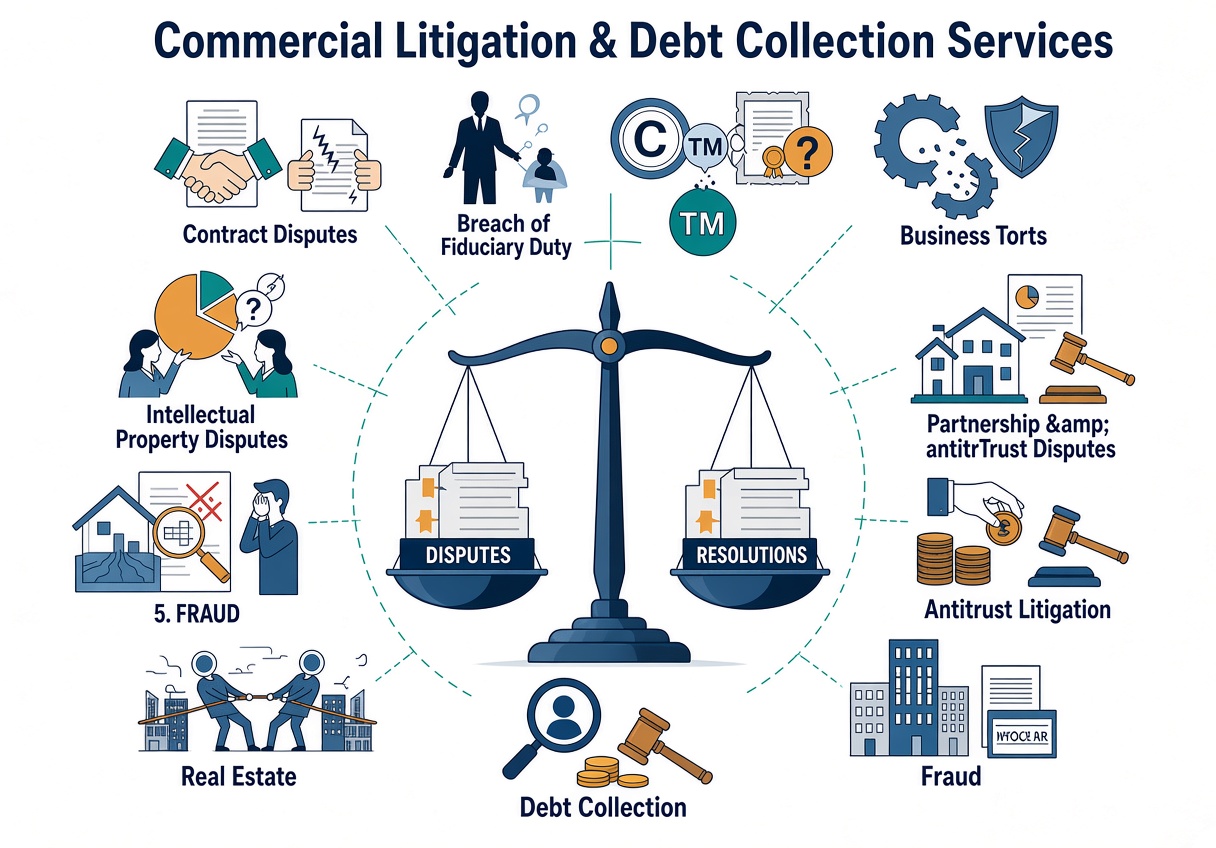
Pursuing debt collection litigation is a business decision that calls for a genuine cost-benefit analysis, weighing the cost of recovery against the debt amount and the realistic likelihood of successful collection. Litigation costs in Kenya generally fall into three categories: advocates’ fees, guided by the Advocates (Remuneration) Order and typically comprising instruction fees and court attendance fees; statutory court filing fees, which scale with the value of the claim; and disbursements, covering costs like serving documents and commissioning affidavits.
A key principle in Kenyan litigation is that costs generally follow the event meaning the losing party is typically ordered to pay a portion of the winning party’s legal costs. This doesn’t guarantee full reimbursement, but it does meaningfully offset a creditor’s net cost of pursuing a valid claim.
Why Ondieki & Matoke Company Advocates
- Direct access to your advocate throughout not a call centre or a junior clerk.
- Clear, honest guidance on whether litigation is genuinely worth pursuing for your specific claim, not a reflexive push to sue.
- Meticulous case preparation, since a debt claim is only as strong as the documentation and evidence behind it.
- A transparent process and fee structure, explained clearly before work begins.

What to Expect — Our Process
- Initial consultation — you share the details of the debt or dispute and the documentation you hold.
- Assessment — we assess the strength of your claim, the appropriate court, and a realistic cost-benefit picture.
- Demand — where appropriate, we issue a formal demand letter before litigation begins.
- Litigation — if the demand goes unanswered, we file suit and pursue the claim through to judgment.
- Enforcement — once judgment is secured, we pursue enforcement to actually recover what’s owed.
Frequently Asked Questions
How can I legally recover a debt in Kenya?
The process typically starts with a formal demand letter giving the debtor a final window to pay. If that fails, a suit is filed in the appropriate court based on the claim amount, and if judgment is secured, enforcement follows through garnishee orders, property attachment, or winding-up proceedings where necessary.
Is a demand letter necessary before suing for a debt?
It’s not always a strict legal requirement, but it’s standard practice and often required by court rules or the underlying contract. A well-drafted demand letter can also prompt payment without the cost and delay of litigation, and it strengthens your position if the matter does proceed to court.
How long does a commercial litigation case take in Kenya?
An undefended claim resolved through default or summary judgment can move relatively quickly. A genuinely defended case that proceeds to a full hearing takes considerably longer, depending on court schedules and the complexity of the dispute.
What happens if the debtor still doesn’t pay after judgment?
A judgment alone doesn’t recover money enforcement does. This can include garnishee orders to attach funds directly from the debtor’s bank account, seizure and sale of property, or, for corporate debtors, a winding-up petition where the debt remains unpaid.
Is it worth pursuing litigation for a small debt?
It depends on the debt amount relative to litigation costs, and the debtor’s actual ability to pay a judgment. This is exactly the kind of cost-benefit question worth discussing with an advocate before filing, since court fees and time invested should be weighed against the realistic likelihood of full recovery.
Call now for a Free Consultation
Contact
0710942629 / 0736677646 / omaadvocates@gmail.com / info@omaadvocates.co.ke
Office
A.C.K. Garden Annex, 1st Ngong Avenue, Ground Floor, Suite 04, Upper Hill, Nairobi, Kenya
Open Hours
Monday-Saturday 8 am – 5pm
Weekends on Appointments only.